


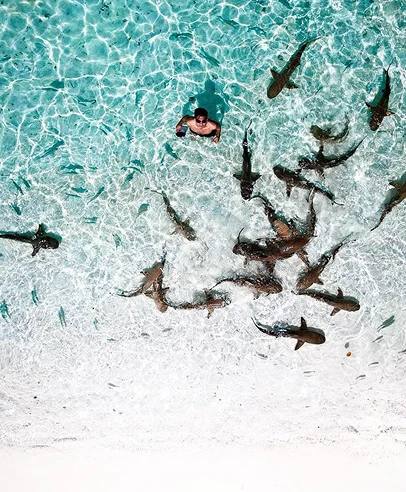
The shark nursery
Juvenile lemon sharks are born here, raised in the safety of the roots, and return — years later — to pup in the exact same waters. It's one of the most studied shark nurseries on earth.
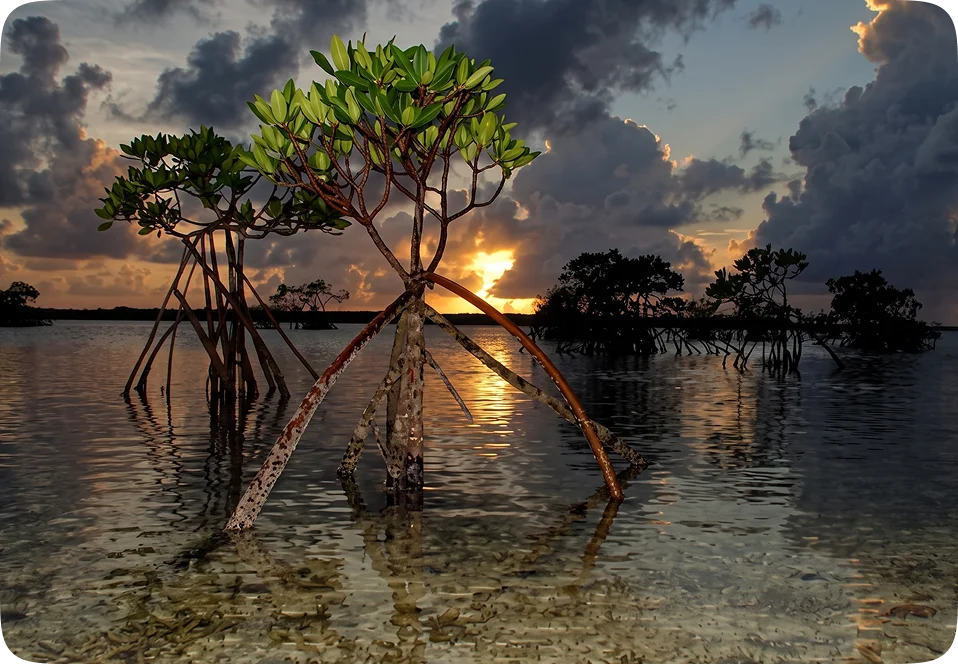
Deep in the East Wells mangroves, something shifts. The open water disappears behind you. The canopy leans in. And the quiet here — it's a different kind of quiet entirely.
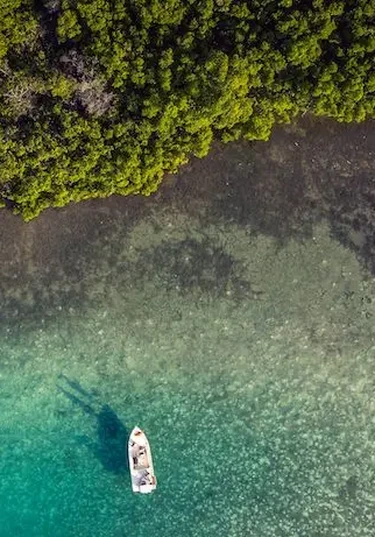
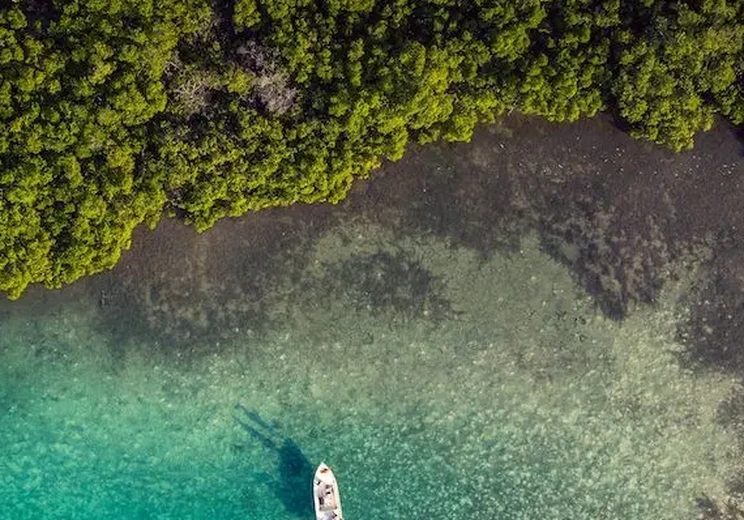
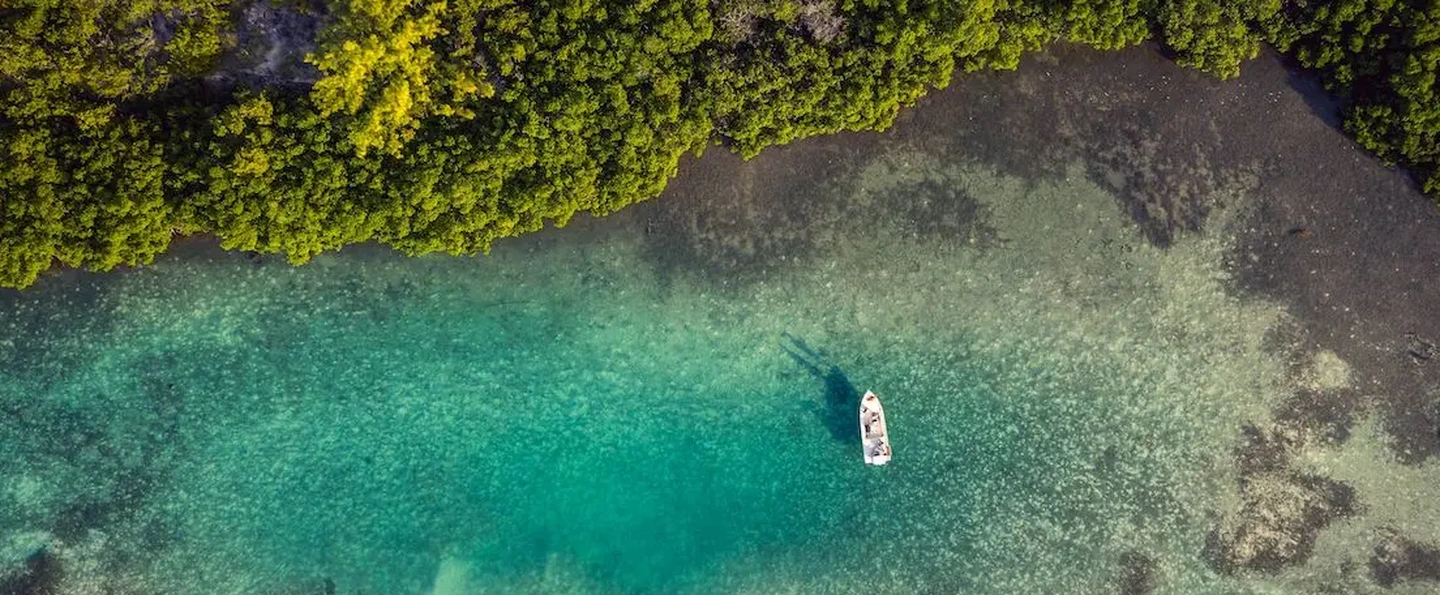
The airboat slows as the channel narrows. Red mangrove roots arch overhead, filtering the light into something greener, older, softer. Sound changes here — the hum of open water gives way to something more intimate. The rustle of branches. Still water. A bird vanishing into the roots. You're not in the Bahamas you thought you knew. You've crossed into something else — a place the locals call God's own nursery, and the name, once you're inside it, makes complete sense.
A PLACE THAT HELD HISTORY
"In these quiet waters, between the roots and the sky, the words came."
Deep in these mangroves lies The Healing Hole — a still, remote pool that locals have revered for generations. Dr. Martin Luther King Jr. found his way here twice, in 1964 and 1968, guided by Bimini fisherman Ansil Saunders through these same tangled channels. In the calm of this place, far from the noise of the civil rights movement, he found the clarity to write. Parts of his Nobel Peace Prize acceptance speech took shape on this water. Ideas that would become "I Have a Dream" drifted through these roots. You'll see the bust that marks the spot.
The East Wells mangroves are the last intact pocket of mature mangrove forest on North Bimini — and the only habitat of their kind along the entire western edge of the Great Bahama Bank. The next closest is sixty miles away. What lives in here is extraordinary.
Juvenile lemon sharks are born here, raised in the safety of the roots, and return — years later — to pup in the exact same waters. It's one of the most studied shark nurseries on earth.
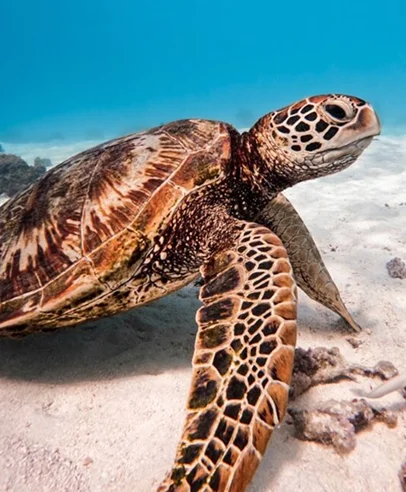
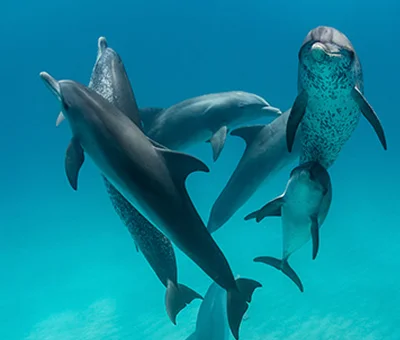
Hawksbill turtles, smalltooth sawfish, the endemic Bimini boa, queen conch, spiny lobster, bonefish, snapper. The estuary supports more life than most places twice its size.
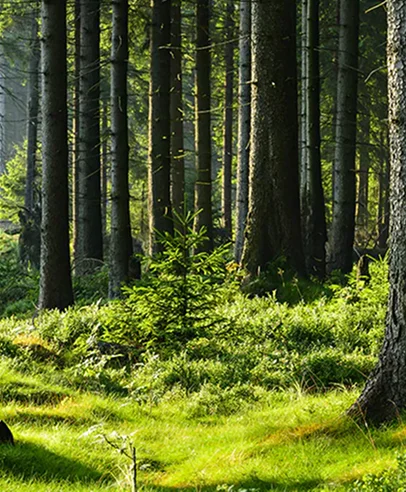
Surrounded on all sides by commercial development, this forest has survived where others haven't. What you're seeing is irreplaceable— sixty miles of open water separate it from anything like it.
Our experiences blend adventure, comfort, and authenticity. From ocean tours to private escapes, we make every moment seamless and unforgettable.
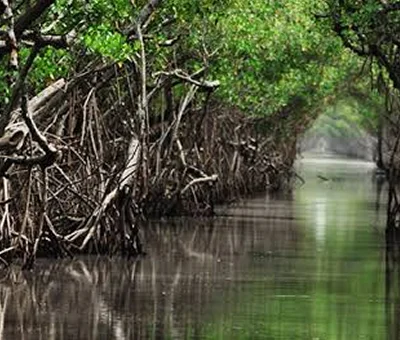
"Often referred to by locals as God's own nursery — this critical habitat is renowned worldwide for its marine biodiversity."
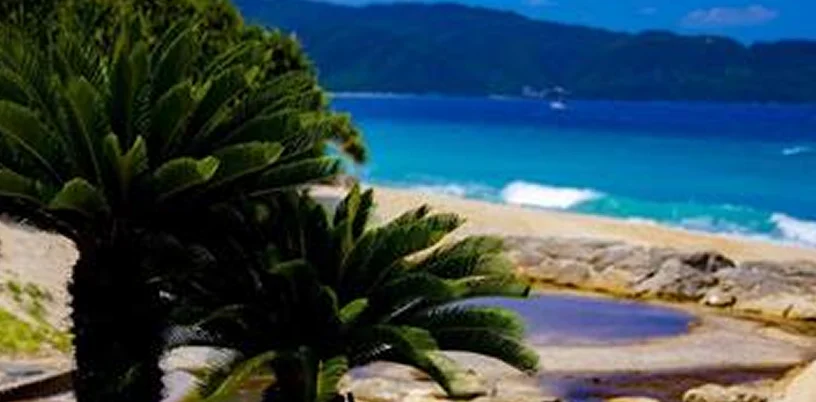
A stop along the airboat tour — the mangroves are the first chapter of your journey. From here, the tour continues out to East Wells Beach. Both are part of one experience, one booking.
Book Now